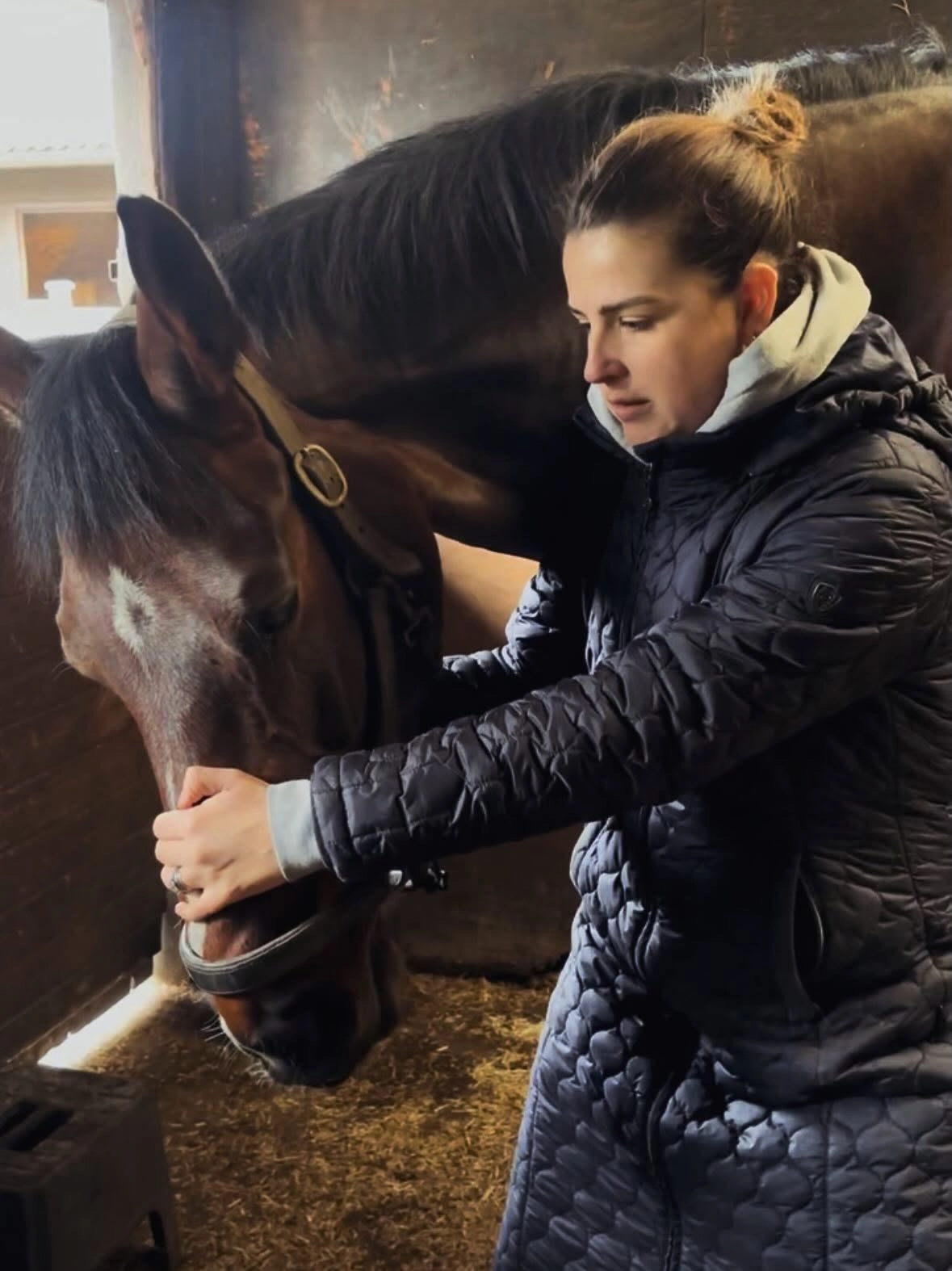
Megan Creighton, MSc veterinary physiotherapist, holding a horse's head at a yard

About Megan Creighton

The person behind the practice

"I treat the animal in front of me, not the diagnosis on the referral form. That means a plan you can actually keep up with at home — and honesty about what physiotherapy can and cannot change."

MSc Veterinary Physiotherapy · IRVAP registered · Certified WINBACK tecar therapy specialist

Her Story

From the yard to a career in rehabilitation

With a background spanning equine performance, racing, veterinary practice and rehabilitation, I am a qualified and IRVAP-registered Veterinary Physiotherapist specialising in equine and canine care.

My academic training began with a BSc (Hons) in Equine Therapy and Rehabilitation at Bishop Burton University College, followed by a Master's degree in Veterinary Physiotherapy at Writtle University College. Since qualifying four years ago, I have developed my clinical experience across both equine and small animal practice, working with animals ranging from competition horses and youngstock to family pets requiring rehabilitation and preventative care.

Alongside my studies and professional career, I gained extensive practical experience within the equine industry, including working in racing yearling preparation, alongside an international event rider, and competing myself through affiliated British Eventing. This combination of academic knowledge and industry experience has given me a practical understanding of biomechanics, performance demands and the physical challenges faced by horses across a range of disciplines.

My equine experience has included working with racehorse winners, HOYS competitors and elite performance athletes, as well as horses at every stage of their careers. I have a particular interest in understanding the individual horse as a whole, recognising how movement patterns, workload, conformation and previous injuries can influence musculoskeletal health and performance.

My clinical experience also extends to small animal veterinary practice, where I have worked within a canine environment and developed knowledge of post-surgical rehabilitation, musculoskeletal conditions and preventative physiotherapy.

I am passionate about bridging the gap between veterinary science, practical rehabilitation and everyday animal care. Whether working with a high-performance athlete, a horse returning from injury or a family dog recovering from surgery, my aim is to provide informed, individualised physiotherapy that supports long-term health, comfort and function.

Outside of my professional life, horses and animals remain a central part of my family life. I own three horses, including my retired event horse, a pony for my children and a young yearling beginning his own journey. I am married with three daughters and two Labradors, which keeps life busy, but also gives me a genuine understanding of the demands of caring for animals within a family environment.

I feel fortunate to have built a career around something I genuinely love, and I am committed to continuing to develop my knowledge and experience to provide the highest standard of care for every animal I work with.
Why Choose Megan

What sets her approach apart

Experienced across both performance and everyday care

With experience spanning elite equestrian sport, racing, veterinary practice and family pets, I bring a broad perspective to animal physiotherapy.

I understand that every animal has different physical demands, whether that’s a competition horse working at a high level, a young horse developing physically or a family dog recovering from surgery.

Qualified and professionally registered

I hold a BSc (Hons) in Equine Therapy and Rehabilitation, a Master’s degree in Veterinary Physiotherapy and am IRVAP registered.

My approach is continually informed by ongoing professional development, clinical experience and current understanding within veterinary rehabilitation.

Assessment-led, not one-size-fits-all

Every animal is different.

Rather than following a standardised treatment routine, I take the time to assess the individual, understand their history and identify the factors contributing to their current presentation.

Treatment is tailored accordingly, with recommendations designed to fit realistically into your animal’s lifestyle and your goals.

A whole-animal perspective

Movement, posture, behaviour, workload, environment and previous injury can all influence musculoskeletal health.

I look beyond isolated areas of tension to understand how the body is functioning as a whole, helping to identify compensatory patterns and contributing factors.

Support beyond the treatment session

Physiotherapy is most effective when owners understand how to support their animal between appointments.

Whether through tailored exercise recommendations, rehabilitation guidance, stretches or management advice, I aim to provide practical support that helps you continue the work at home.

In-person or online support

Not every animal requires an in-person physiotherapy appointment, and sometimes professional guidance is needed.

Through online consultations and support, I can help owners understand movement, management, exercise and rehabilitation strategies for their horse or dog, wherever they are located.

Whether you are looking for hands-on physiotherapy, rehabilitation guidance or support with maintaining your animal's physical wellbeing, my aim is to provide knowledgeable, practical and individualised care.

The Treatment Process

How every session unfolds

01 — CONNECT

Before treatment begins, I take the time to observe, listen and understand.

This includes assessing how the animal moves, stands and interacts with their environment, alongside a detailed discussion of their history, workload, lifestyle and any concerns from owners, riders or veterinary professionals.

Through static and dynamic assessment, I look at movement patterns, biomechanical asymmetries and compensatory strategies that may be influencing the body.

This initial connection allows me to build trust with the animal whilst developing a clear understanding of the bigger picture.

02 — PREPARE

Once an assessment has been completed, treatment begins by preparing the body.

Using manual therapy techniques including massage, soft tissue mobilisation, myofascial techniques and appropriate manipulation, I work to improve tissue quality, circulation and mobility.

Effleurage and other preparatory techniques help assess how tissues are responding and allow treatment to be progressed appropriately.

This stage is about creating the right conditions for change, whilst continually monitoring the animal's response throughout the session.

03 — RELEASE

Release is where targeted physiotherapy techniques are used to address areas of restriction, tension and dysfunction.

Through hands-on treatment, stretching, mobilisation and carefully selected modalities, I aim to encourage improved tissue mobility and reduce compensatory tension without forcing the body beyond its comfort level.

Where appropriate, I incorporate advanced modalities including WINBACK tecar therapy, laser therapy and PEMFT, alongside traditional manual physiotherapy techniques.

The treatment plan is always individualised. No two animals require exactly the same approach.

04 — INTEGRATE

Physiotherapy does not end when the hands-on treatment finishes.

The final stage is about helping the body incorporate the changes achieved during treatment into everyday movement and function.

This may involve appropriate stretches, mobility exercises, movement recommendations, workload adjustments or rehabilitation strategies tailored to the individual animal.

For horses, this can include considering ridden work, groundwork, pole exercises or changes to management. For dogs, it may involve home exercises, controlled movement plans or adjustments to daily activity.

Integration is an important part of creating meaningful, sustainable results. The aim is not simply to make an animal feel better during a session, but to support improved movement, comfort and function beyond the treatment room.

Qualifications

Credentials & memberships

Every credential below is maintained and renewed annually as a condition of practising.

BSc (Hons) Equine Therapy and Rehabilitation

Undergraduate degree from Bishop Burton University College, the foundation of her clinical training.

MSc Veterinary Physiotherapy

Postgraduate clinical training in animal musculoskeletal assessment and rehabilitation, from Writtle University College.

IRVAP Registered

Listed on the public register of veterinary physiotherapists, with annual continuing professional development.

Certified WINBACK Tecar Specialist

Formal training in WINBACK radiofrequency therapy for pain relief and tissue recovery.

Fully Insured

Professional indemnity cover, held and renewed annually.

Ready to talk about your animal?

A first conversation costs nothing and will tell you whether an assessment is worth booking.

Book a Consultation